


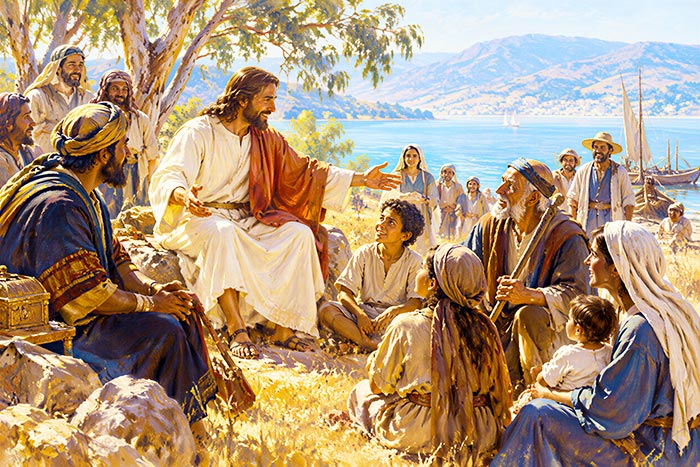
“Blessed are the poor in spirit, for theirs is the kingdom of heaven”
Matthew 5:3
What kind of poverty is Jesus describing in his first beatitude found in the Gospel of Matthew, Chapter 5? And how is it related to the kingdom of Heaven? The Greek New Testament word for poverty, ptōchos, literally means to be destitute – totally lacking what is necessary for daily life and survival. It is connected with the root ptōssein, which means to crouchor to cower; and it describes the poverty of those literally forced to their knees to beg.
Augustine of Hippo points out that human poverty is more than lack of material substance such as food, clothing, shelter, and medical help when we become sick or injured. Poverty of soul, mind, heart, and will and spirit affect us more deeply than we may realize.
The prophet Jeremiah asserted that “the heart is deceitful above all things, and desperately corrupt; who can understand it? I the Lord search the mind and test the heart, to give to every man according to his ways, according to the fruit of his doings. (Jeremiah 17:9-10). Jesus stated our condition even more forcefully. “For from within, out of the heart of man, come evil thoughts, fornication, theft, murder, adultery,coveting, wickedness, deceit, licentiousness, envy, slander, pride, foolishness. All these evil things come from within, and they defile a man.” (Mark 7:21-23).
When a rich young man approached Jesus, he asked, “Good Teacher, what must I do to inherit eternal life?” And Jesus said to him, “Why do you call me good? No one is good but God alone” (Mark 10:17-18, Luke 18:18-19). Those who are poor in spirit know their true condition. We cannot save ourselves from the corruption of sin and evil in the world. But what is impossible to man is possible to God. Apart from God, we acknowledge that we are utterly poor, worthless, unworthy, and unable to free ourselves and to choose for good in all things and all circumstances.
Saint Augustine of Hippo said that whether rich or poor, we are all beggars of God:
“Even though you possess plenty, you are still poor. You abound in temporal possessions, but you need things eternal. You listen to the needs of a human beggar, yet you yourself are a beggar of God. What you do with those who beg from you is what God will do with his beggar. You are filled and you are empty. Fill your empty neighbor from your fullness, so that your emptiness may be filled with God’s fullness.” (Sermon 56,9)
In his commentary on the first beatitude Augustine wrote:
“In a text about the desire for earthly possessions we read, All is vanity and presumption of spirit (Ecclesiastes 1:14). Presumption of spirit means arrogance and pride. Generally speaking, proud people are said to have inflated spirits, and rightly so, since spirit is also called wind. Scripture says, Fire, hail, snow, ice, stormy wind (Psalm 148:8). Who does not know that the proud are described as inflated, blown up as though with wind? Hence we have the words of the Apostle, Knowledge inflates, love builds up (1 Corinthians 8:2). With good reason, therefore, can the poor in spirit be understood as those who are humble and fear God – who do not, in other words, possess an inflated spirit. Indeed, blessedness can have no other beginning if we wish to arrive at perfect wisdom. The beginning of wisdom is the fear of the Lord (Sirach 1:14; Psalm 111:10), because in contrast it is written, Pride is the beginning of all sin (Sirach 10:13).5 Let the proud, therefore, desire and love the kingdoms of this world, but blessed are the poor in spirit, for theirs is the kingdom of heaven. (excerpt from On the Beatitudes of God’s Kingdom, by Augustine of Hippo)
The Hebrew understanding of “poor in spirit”
The biblical word for poor in Hebrew is ’ani or ebiōn. It conveys a richer understanding than the literal meaning in Greek These words in Hebrew underwent a four-stage development of meaning. (1) They began by meaning simply poor. (2) They went on to mean, because poor, therefore having no influence or power, or help, or prestige. (3) They went on to mean, because having no influence, therefore downtrodden and oppressed. (4) Finally, they came to describe those who, because they have no earthly resources whatever, put their whole trust in God. So, in Hebrew the word poor was used to describe the humble and the helpless people who put their whole trust in God.
We can see examples of this in the Book of Psalms:
‘This poor soul cried, and was heard by the Lord, and was saved from every trouble’
Psalm 34:6
‘The hope of the poor [shall not] perish for ever’
Psalm 9:18
God delivers the needy.
In your goodness, O God, you provided for the needy’ (Psalm 68:10).
Psalm 35:10
‘May he defend the cause of the poor of the people’
Psalm 72:4
‘He raises up the needy out of distress, and makes their families like flocks’
Psalm 107:41
‘I will satisfy its poor with bread’
Psalm 132:15
In all these cases, the poor are the humble and helpless who have put their trust in God.
So what does “poverty of spirit” mean for the disciples of Christ?
It is the awareness of our own inadequacy, worthlessness, and destitution and that none of us can save ourselves – nor can we grow and bear good fruit apart from abiding with Christ (John 15 parable on the vine and branches). We recognize that we cannot live as God intended for us – but with God all things are possible for those who believe in him. This beatitude shows us true path to freedom and goodness can only be attained through our dependence and complete surrender to God. Only God can change and transform us into his likeness (the true likeness and character of Christ). This comes about through the grace and power of the Holy Spirit who works in and through us for his own glory.
Poverty of spirit frees us from the rule of fear and the myth that the more we possess the happier we will be. Blessed are those who understand that we are nothing in ourselves and we possess nothing that we can call “my own.” All we have belongs to God – including our very lives.
When we realize our own utter helplessness, and put our whole trust in God, we learn the secret and freedom of complete detachment from material things, and we become, more and more completely attached to God himself. In God alone is our true source of hope, joy, and strength. Those who are poor in spirit are men and women who have realized that things mean nothing, and that God means everything.
God is generous toward us and he calls us to be generous and kind to our neighbors as well – and especially with those who are oppressed and destitute. We are called to help those in need. Jesus would never have called blessed a state where people live in slums and do not have enough to eat, and where health deteriorates because conditions are against it. It is the aim of the Gospel to remove that kind of poverty. The poverty which is blessed is the poverty of spirit where people realize their utter need and dependence on God and his provision for our lives.
Paul the Apostle shows us the attitude of contentment we should embrace:
“Not that I complain of want; for I have learned, in whatever state I am, to be content. I know how to be abased, and I know how to abound; in any and all circumstances I have learned the secret of facing plenty and hunger, abundance and want. I can do all things in him who strengthens me.
Philippians 4:11-13
What is the kingdom of heaven?
Jesus says the poor in spirit who trust and obey him become citizens of God’s kingdom – the kingdom of heaven. What is the kingdom of heaven? If we take the two petitions of the Lord’s Prayer and set them together: Your kingdom come. Your will be done in earth as it is in heaven, we get a true depiction of what it means to be citizens of God’s kingdom: The kingdom of God is that society of people where God’s will is fully embraced on earth as it is in heaven. Only those who do God’s will are true citizens of his kingdom. And they inherit all the blessings, privileges, and gifts that God has promised to those who follow and serve him.
Jesus explains – “where your treasure is, there will your heart be also” (Matthew 6:21). The material treasures of this world are temporal – they do not last and cannot satisfy our deepest hunger and desire for unending peace, joy, and happiness. The Lord Jesus offers us a treasure that no one can take from us – abundant life and happiness with God and his people forever.
Oh the bliss of those who have realized their own utter helplessness and utter inadequacy, and who have put their whole trust in God, for they humbly accept the will of God and obey his word, and in so doing live as citizens of the kingdom of heaven!
William Barclay
Questions for Reflection and Discussion:
- Do you know and trust in God’s love and provision for your life?
- Where do you find contentment and joy?
- How can a spirit of detachment free you to be more generous in loving and serving others?
See related articles in Living Bulwark:
- On the Beatitudes of God’s Kingdom, by Augustine of Hippo
- The Beatitudes Are Inseparable from the Cross, by Fulton J. Sheen
- Living the Beatitudes as Christ Has Taught Us, by Steve Clark
- Jesus Calls his Community of Disciples “Blessed”, by Dietrich Bonhoeffer
For further study read:
- The Paradoxes of Christianity is explored in Chapter Six of G.K. Chesterton’s classic work Orthodoxy. It revolvesaround the idea that the faith does not seek a mild, lukewarm compromise between extremes. Instead, it holds opposing virtues, commands, and realities at maximum intensity
- C. S. Lewis also wrote a similar short essay on There Are No Ordinary People – You Have Never Talked to a Mere Mortal. https://livingbulwark.net/there-are-no-ordinary-people-you-have-never-talked-to-a-mere-mortal/
Top image credit: Illustration of Jesus Sermon on the Mount overlooking the Lake of Galilee. Image created with digital paintbrush and AI enhanced artwork from © Artstyles.com. Used with permission